
Elettricità: accesso e limiti
Nell’ultimo decennio, l’Etiopia ha registrato un aumento costante della penetrazione della rete elettrica e un uso sempre più diffuso dell’elettricità, sia per le attività commerciali sia per il consumo domestico. Diversi programmi internazionali hanno promosso iniziative per collegare gli etiopi alla rete: tra questi vale la pena menzionare l’Ethiopia Electrification Program (ELEAP) e l’Access to Distributed Electricity and Lighting in Ethiopia (ADELE), entrambi finalizzati all’elettrificazione universale del Paese.
Ciononostante, questa espansione si è concentrata principalmente nelle aree urbane, lasciando molte zone rurali ancora al buio. L’elettrificazione urbana ha raggiunto il 94% nel 2022–2023, mentre l’accesso rurale è rimasto molto più basso, tra il 20 e il 45%, contribuendo a una media nazionale del 55,4% nel 2023 — in netto aumento rispetto al 20% del 2015.
L’elettrificazione rurale emerge costantemente in letteratura come catalizzatore del cambiamento strutturale nelle economie rurali: consente infatti alle famiglie di riallocare tempo e manodopera dal lavoro agricolo a bassa produttività verso attività autonome non agricole e lavori salariati più redditizi, come dimostrato in Ghana, Cambogia, Sudafrica e India.
La letteratura scientifica evidenzia inoltre una serie di benefici collaterali derivanti dall’allacciamento alla rete nelle famiglie rurali, che non sono emersi pienamente nel contesto da noi analizzato. A livello familiare, studi condotti in Vietnam e Nicaragua rilevano che l’allacciamento alla rete elettrica aumenta il reddito e la spesa totale, in parte grazie all’apertura di nuove attività generatrici di reddito e all’estensione delle ore produttive fino a sera. Nelle famiglie allacciate che abbiamo visitato nei dintorni di Debre Birhan, l’elettricità veniva invece utilizzata semplicemente per illuminare singole lampadine, caricare i cellulari, e molto più raramente per cucinare.
In teoria, l’elettrificazione incoraggia l’adozione di elettrodomestici che facilitano il lavoro, riduce la dipendenza dalla legna da ardere e da altri combustibili tradizionali, e libera il tempo di donne e bambini dalla raccolta della legna e da altre faccende domestiche. Nei dintorni di Debre Birhan non abbiamo trovato elettrodomestici di questo tipo nelle famiglie, ma ci è stato confermato che una parte consistente del tempo era ancora dedicata alla raccolta della legna da ardere — un compito che ricadeva generalmente sulle spalle dei più giovani.
Per quanto riguarda l’istruzione, un’ampia serie di valutazioni d’impatto condotte in Asia e in America Latina mostra una maggiore frequenza scolastica e un numero maggiore di anni di scolarizzazione, specialmente nei villaggi in precedenza non serviti dall’elettricità.
Più recentemente, prove quasi-sperimentali provenienti da India e Bhutan collegano un migliore accesso e una maggiore affidabilità dell’elettricità a punteggi migliori nei test, a più tempo dedicato allo studio la sera, e a un maggiore investimento nell’istruzione dei figli — sia attraverso l’aumento del reddito, sia attraverso il cambiamento delle aspettative dei genitori. Per saperne di più su questo argomento, si rimanda al capitolo dedicato all’istruzione.
In letteratura, l’accesso all’elettricità migliora anche la sicurezza alimentare, consentendo la refrigerazione, la conservazione a freddo e una preparazione più sicura degli alimenti. Questo aspetto non sembra però rilevante nel contesto rurale etiope che abbiamo visitato, poiché le temperature restano generalmente piuttosto basse tutto l’anno, a causa dell’elevata altitudine della regione.
La maggior parte delle famiglie intervistate nell’area di Debre Birhan non dispone di un allacciamento alla rete elettrica, ma di pannelli solari personali con piccole batterie, che permettono loro di soddisfare le necessità quotidiane di base: illuminazione tramite lampadine e ricarica dei telefoni cellulari. Anche le poche famiglie con un allacciamento stabile utilizzavano l’elettricità in modo analogo a chi si affida ai pannelli solari: principalmente per accendere singole lampadine e ricaricare i telefoni.
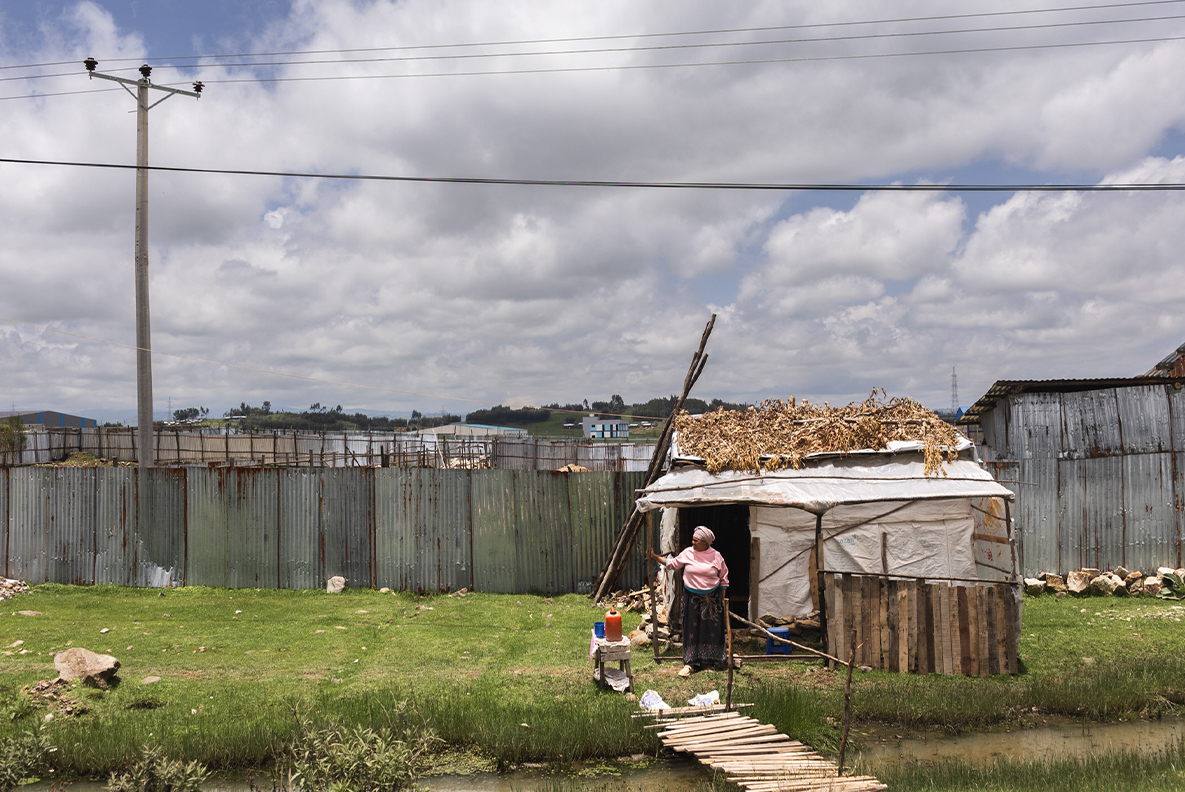
Nei dintorni di Debre Birhan, la rete elettrica è presente solo nella città stessa e in prossimità della strada asfaltata principale, dove è comune trovare alcuni insediamenti informali, come quelli visibili nella foto. Non appena la strada sparisce nelle campagne, scompare anche la rete elettrica.
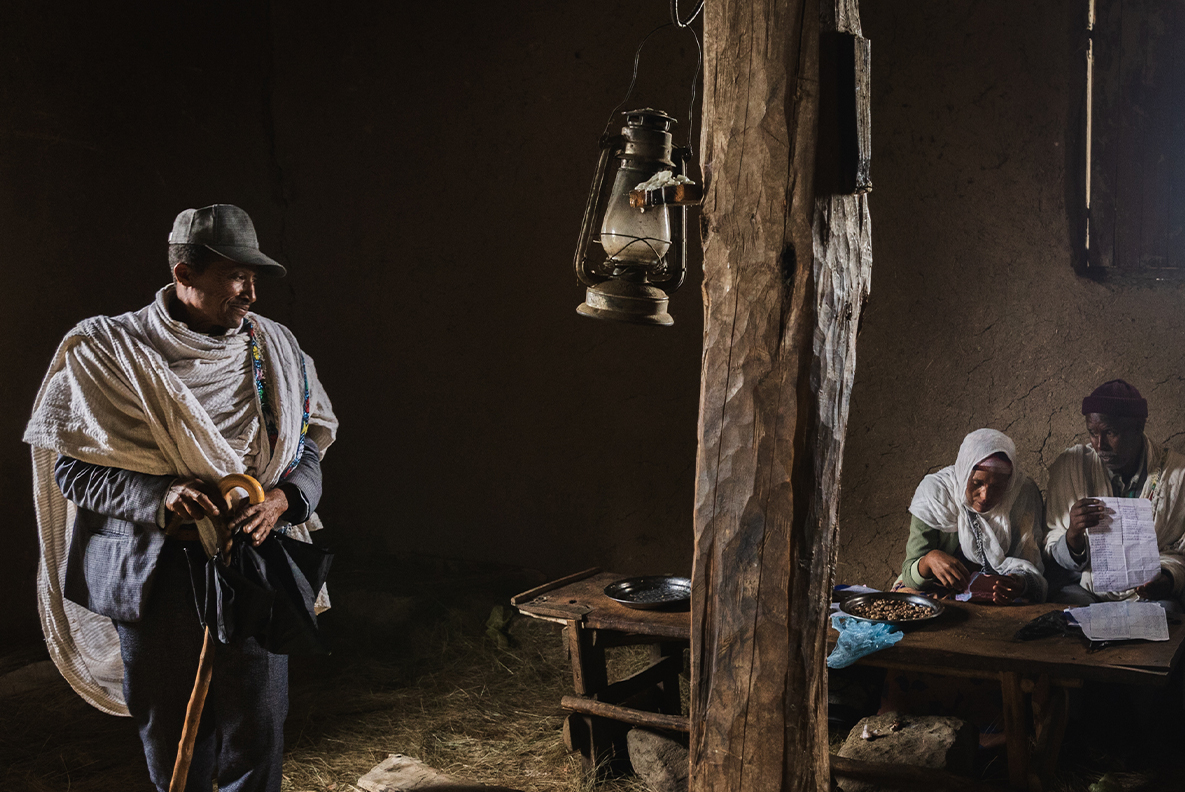
A Etege, un villaggio vicino a Debre Birhan nell’Etiopia centrale, gli abitanti si riuniscono in una sala comune. Lo spazio può essere illuminato da candele, da una lampada a olio o dall’elettricità, che è recentemente stata prelevata illegalmente dalla rete con un cavo di 2.100 metri, una pratica tollerata data la vicinanza alla chiesa. L’elettricità è arrivata al villaggio solo tre mesi prima che questa fotografia fosse scattata; in precedenza, la gente faceva affidamento esclusivamente su pannelli solari, lampade a olio e luce di candela.
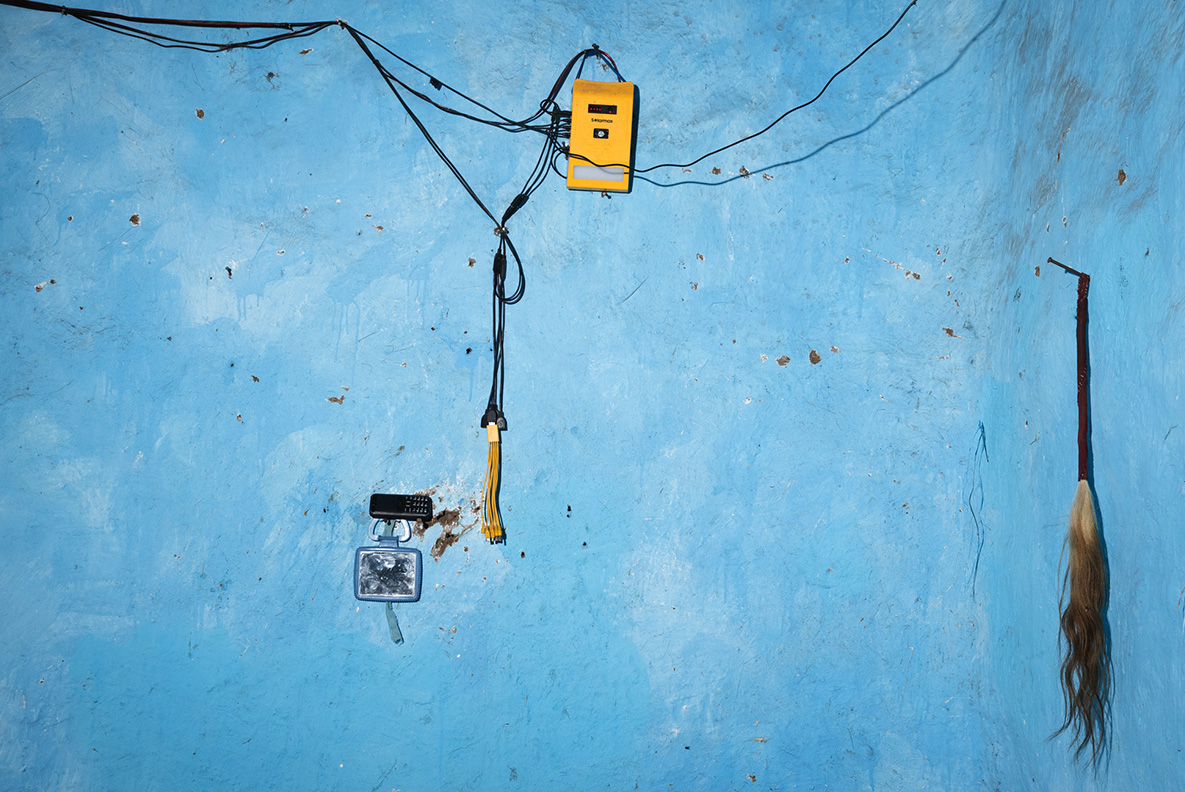
La maggior parte delle famiglie intervistate nella zona di Debre Birhan non dispone di un allacciamento alla rete elettrica, ma di pannelli solari personali con piccole batterie, come nel caso della famiglia Woldemedhin, che vive a Etege. Questa piccola batteria permette di utilizzare l’elettricità per le necessità quotidiane di base, come l’illuminazione grazie alle lampadine o la ricarica dei telefoni cellulari.
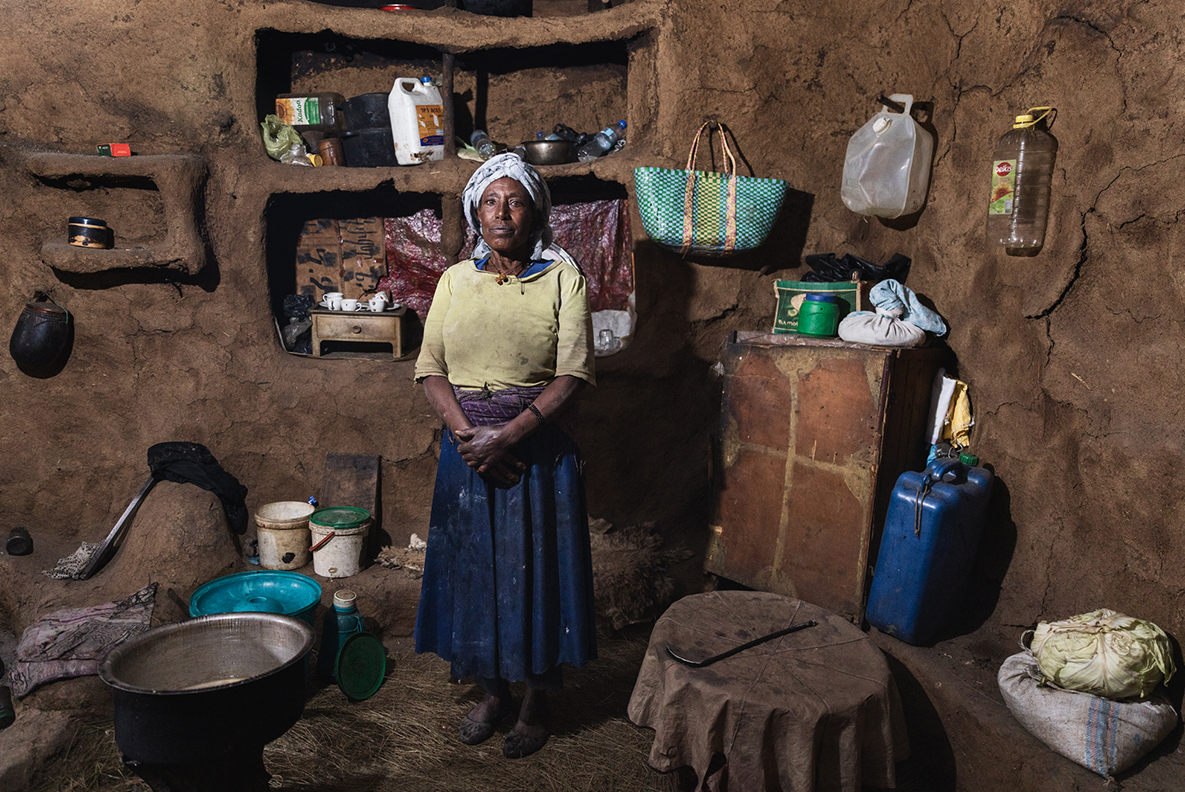
Sirgute Gebirehanna, 42 anni, posa per un ritratto a casa, che condivide con il marito e i due figli adottivi, dopo che sei dei suoi figli biologici sono cresciuti e ora vivono in modo indipendente. La famiglia è allacciata alla rete elettrica e utilizza l’energia per l’illuminazione. Possiede anche un pozzo per l’acqua dolce, ma non dispone di servizi igienici. La scuola più vicina dista un’ora a piedi, mentre l’ospedale più vicino è a quattro ore di cammino.
Bibliografia
"From Darkness to Light: The Effect of Electrification in Ghana, 2000–2010."
Economic Development and Cultural Change, 66(1).
"An Empirical Assessment of the Effects of Electricity Access on Food Security."
World Development, 141.
"(En‑)'lightening' Children: Assessing the Impacts of Access to Electricity on Learning Achievement Levels."
Review of Development Economics (2023)
"Rural Electrification and Changes in Employment Structure in Cambodia."
World Development, 137.
"The Effects of Rural Electrification on Employment: New Evidence from South Africa."
American Economic Review, 101(7)
"Rural Electrification and Employment in Poor Countries: Evidence from Nicaragua."
World Development 43
"Welfare Impacts of Rural Electrification: A Panel Data Analysis from Vietnam."
Economic Development and Cultural Change 61(3)
"The Impact of Rural Electrification on Income and Education: Evidence from Bhutan."
Review of Development Economics, 22(3).
"Development Effects of Electrification: Evidence from the Topographic Placement of Hydropower Plants in Brazil."
American Economic Journal: Applied Economics, 5(2).
"Electricity Provision and Industrial Development: Evidence from India."
Journal of Development Economics, 97(2).