

Education and the role of electricity
National adult literacy is about 52 percent, but rural rates are markedly lower than urban ones, with 86 percent of rural adults lacking primary completion versus urban advantages in access. Pre-primary gross enrollment ratio hit 57.8 percent in 2023/24 (up 7.8 points from prior year), yet rural pastoralist regions like Afar (24.8 percent) and Somali (12.4 percent) trail far behind Addis Ababa’s near-100 percent primary enrollment. Primary net enrollment is 45.2 percent nationally (versus 57.8 percent gross), with completion rates at 61–69 percent for boys and 65 percent overall, declining recently and especially low rurally.
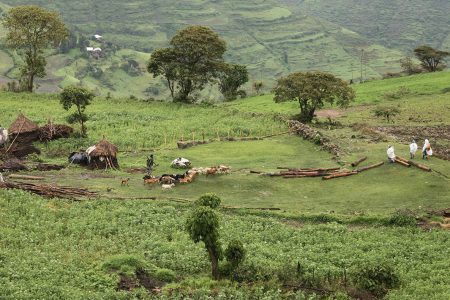
Education is a key determinant of societal development, still in rural Ethiopian villages, attending school for children might be difficult. Lack of safe rural roads, long distances to reach schools and child labour activities might hamper the educational attainment of children. The primary completion rate in 2024 was slightly above 50%, one of the worst rates of the continent (World Bank, 2025). Moreover, learning gaps represent an important barrier for children’s human capital accumulation, reports indicate that 90% of 10 years-old children are unable to read simple texts (UNICEF, 2025).
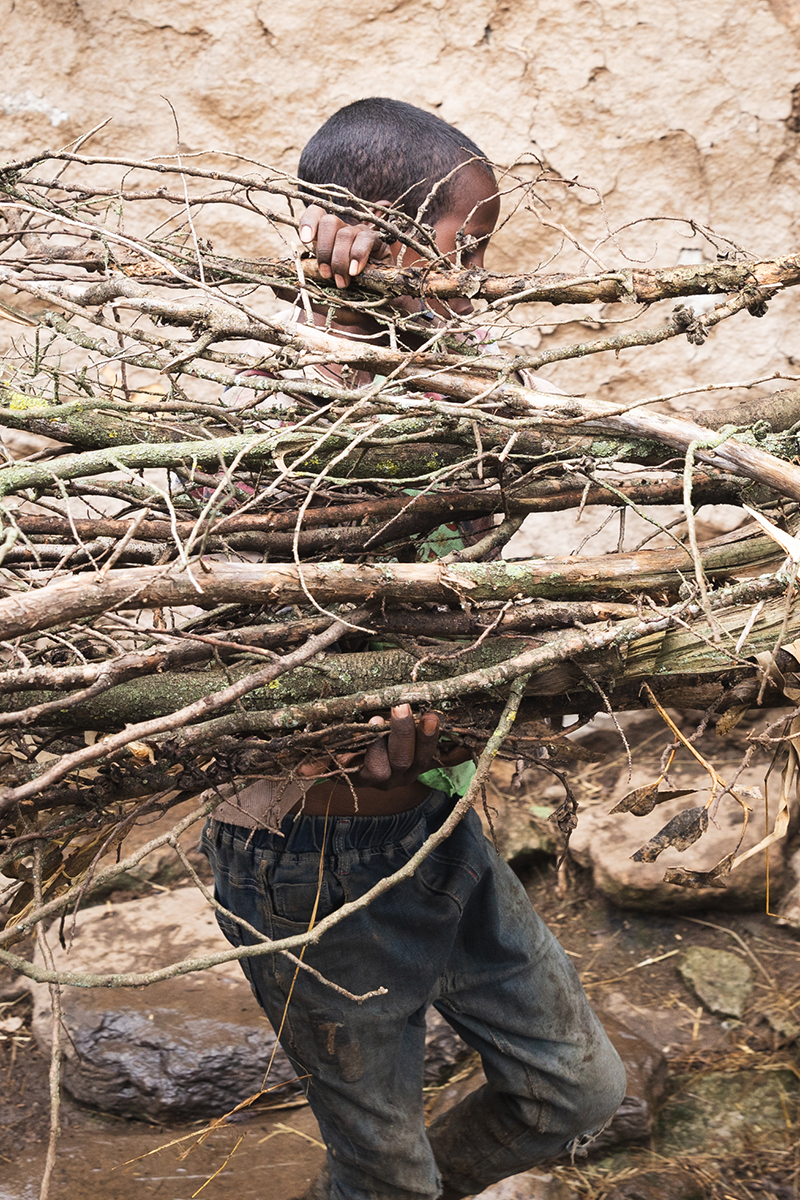
When families face financial distress, it is common to observe children working in the agricultural family business or outside it for money. An increase of child labour is not only detrimental for children’s health but for their educational attainment. In Ethiopia, 43% of children work and 23% of the child population is involved in hazardous activities. These figures rise when considering specifically children living in rural contexts, where the total size of agricultural plots is positively correlated with the probability for a child to work (UNICEF, 2020). Notably, it is not always the case for a trade off between labour and education. Education and labour are not substitutes when families. Financial inclusion and increase in productive assets might lead to a simultaneous increase both in time in education and in time working, decreasing leisure time (Galdo, 2025).
The analysis is conducted using the Ethiopian Young Lives Dataset due to its richness in detailed information on household and children characteristics. The dataset focuses on children’s development and the multi-dimensionality of poverty and it allows to track information about children and their families through multiple rounds from 2002 to 2017.
It collects information on a set of different shocks affecting households economic activities and it provides information on access to electricity
We focus on children from the Young Lives younger cohort in rural Ethiopia, tracked from Round 3 (2009-2010, age ∼ 8) to Round 5 (2016-2017, age ∼ 15). Ethiopia → sample of 3286 observations. Households unable to absorb short-run shocks often rely on children as a buffer. Does improved electricity access sufficiently protect children’s schooling in such contexts?
Its protective role for children’s schooling under such shocks remains uncertain. Children’s time allocation is crucial for human capital development, yet in many developing countries, children contribute significantly to household chores and paid work. This study goes beyond the average effect of electricity access on children’s time use (previously explored by Proffen, 2025), focusing on heterogeneous impacts across household conditions and shocks.
Results show electricity access has a protective effect on study time only when the household head has a higher level of education — likely because electricity is used effectively in these households.
Climate and income/business shocks erase the positive effect of electricity for affected families. Food insecurity, as a proxy for low income, also nullifies the benefits; only children in food-secure households experience gains from electricity access. Electricity alone is not sufficient to protect children’s time for education.
education-and-electricity-ethiopia-4
education-and-electricity-ethiopia-3
education-and-electricity-ethiopia-2
education-and-electricity-ethiopia-1